Is concrete block really safer than wood frame for living on the Space Coast? If you are weighing homes in Melbourne, the choice can feel high stakes with our heat, humidity, and hurricane season. You want a house that fits your budget, holds up to weather, and keeps insurance and maintenance in check. This guide breaks down how concrete block and wood frame homes perform in Melbourne so you can shop with confidence. Let’s dive in.
Why construction type matters in Melbourne
Melbourne sits in a hot, humid, hurricane-exposed coastal area. Homes here face heavy rain, high winds, and potential flooding. That local climate shapes how different construction types perform and what maintenance they need.
Florida uses the Florida Building Code, which has strong wind-resistance requirements. Brevard County applies the state code through local permitting and, in some areas, coastal construction standards. For flood risk, FEMA flood maps and elevation rules guide how homes must be built or mitigated.
Wind and storm performance
Wind resistance basics
- Concrete block (CBS) walls, when reinforced and tied to the roof per code, offer strong wind and impact resistance.
- Wood frame homes that meet current Florida code can also perform well if they have a continuous load path, proper roof-to-wall ties, and protected openings.
- The big takeaway: material alone is not decisive. Roof quality, connection hardware, and impact protection for windows and doors matter most for both types.
Flood, surge, and elevation
- In flood-prone zones, elevation and foundation type matter more than wall material. Flood openings, pier or slab design, and how water can pass through or around the structure are key.
- Wood frame can suffer more expensive repairs after flooding if water intrusion leads to mold or hidden damage in sheathing and framing.
- CBS can handle lateral loads well when engineered correctly, but it still relies on proper flood design to reduce damage.
Fire considerations
- CBS provides inherent fire resistance for walls.
- Wood frame relies on fire-rated assemblies where required. Roof covering, vents, and eaves are critical details for both types.
Durability, pests, and moisture
Termites and wood-destroying organisms
- Wood frame is more vulnerable to termites and wood rot in Florida’s climate. Routine prevention, soil treatments, and periodic inspections are common in Brevard County.
- CBS walls are not food for termites, but wood elements still exist in every home, including roof framing, window frames, and porches. Termite entry at sill plates and penetrations remains a concern in both types.
Moisture and exterior finishes
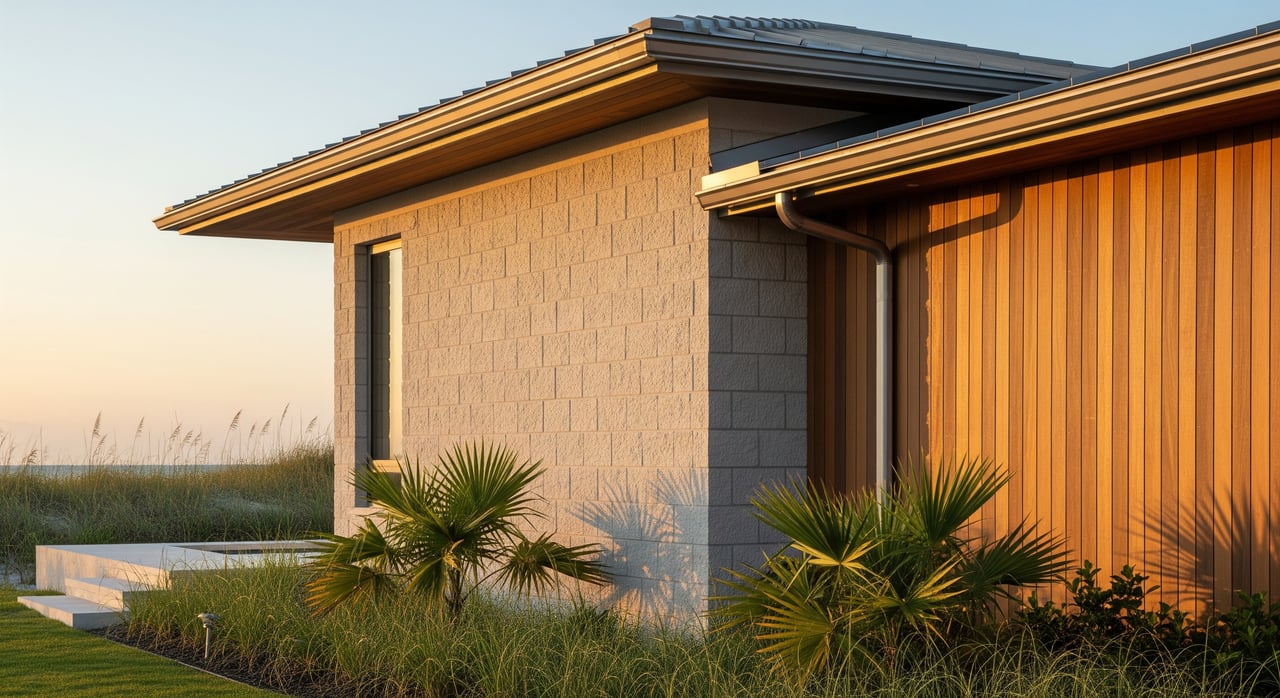
- CBS homes in our area often use stucco. Stucco and flashing must be detailed and maintained well to prevent water intrusion. Cracking, poor sealing, and trapped moisture can cause hidden issues.
- Wood frame depends on tight water management. Siding, flashing, sealants, and drainage planes must be installed and maintained correctly to avoid rot and mold.
Energy and comfort in a hot-humid climate
- Concrete block has high thermal mass but needs a good insulation strategy to match the performance of well-insulated wood framing. Without insulation, block walls can lag.
- Both types can be efficient when properly air-sealed and insulated. In Melbourne’s humidity, right-sized HVAC and good humidity control are as important as wall type.
Maintenance at a glance
Common CBS tasks
- Inspect and seal stucco cracks. Refresh exterior paint and sealants as needed.
- Maintain flashing and roof-to-wall connections.
- Watch for efflorescence, spalling, and proper drainage around the slab.
Common wood-frame tasks
- Keep siding, paint, trim, and caulking in good condition.
- Schedule regular termite inspections and address any moisture issues quickly.
- Replace damaged or rotted components and verify proper flashing at windows and doors.
Tasks both homes share
- Roof inspections and timely repairs.
- Window and door maintenance, including opening protection.
- Gutter and drainage upkeep, plus consistent HVAC service for humidity control.
Insurance, inspections, and financing
Florida’s insurance market changes often. Many carriers offer credits for strong wind-mitigation features, newer roofs, and impact-rated openings. While some insurers view masonry favorably, underwriting looks at whole-house risk, including roof age, opening protection, elevation, and prior claims.
Key inspections and documents that can help your decision and your premiums:
- Wind mitigation inspection that documents roof deck attachment, roof-to-wall connections, roof shape, secondary water resistance, and opening protection.
- Elevation certificate if the home is in a mapped flood zone.
- Pest and termite inspection to validate treatment history, especially for wood frame.
- Moisture and mold assessment if there are signs of prior leaks or intrusion.
- Structural checks tailored to the home type: masonry reinforcement and cracking for CBS, framing connections and sheathing for wood.
Repair costs vary by event. Wind damage often concentrates on the roof and openings for both types. Flood and moisture damage can be more invasive for wood frame due to water absorption and mold risks.
How to choose in Melbourne neighborhoods
Construction type often reflects neighborhood age, location, and builder practice. Near the coast, you may see more CBS and elevated designs. Inland or in older subdivisions, wood frame is common. New construction varies by builder and lot location.
Here is a practical way to align your choice:
- If you prioritize wind and fire resistance in storm seasons, CBS can offer peace of mind when reinforced and detailed correctly.
- If you want flexibility in insulation and potentially lower initial cost in some areas, wood frame can be a strong option when built to current code with quality detailing.
- If the property is in a flood zone, elevation and proper flood design should outweigh material preference.
- Compare typical insurance rates by asking for sample premiums on comparable homes, and review wind-mitigation opportunities.
Buyer checklist for showings
Use these targeted questions as you tour:
- Is the home in a mapped flood zone and what is the elevation certificate status?
- What is the roof age, roof covering, and roof-to-wall connection method? Ask for the wind mitigation report.
- Are windows, doors, and the garage impact-rated or protected?
- For CBS: Any visible stucco cracking, signs of movement, or questions about wall reinforcement and lintels?
- For wood frame: Condition of siding, trim, and flashing? Any signs of past water intrusion?
- What is the termite treatment and inspection history?
- How is drainage around the slab or foundation managed?
Common myths, clarified
- Myth: “CBS is always better.” Reality: CBS has inherent wind and fire advantages, but code-compliant wood frame with strong connections and protected openings can perform very well.
- Myth: “Block homes are always more efficient.” Reality: Energy performance depends on insulation and air sealing. Properly insulated and sealed homes of either type can be efficient in Melbourne.
- Myth: “Insurance is always cheaper for block.” Reality: Carriers assess the whole house, including roof age, opening protection, elevation, and claim history. Construction type is one factor.
Final thoughts and next steps
You do not have to pick a house based on material alone. In Melbourne, the best choice mixes location, elevation, wind-mitigation features, and maintenance history. If you compare homes with that lens, you will land on a solid fit whether the walls are concrete block or wood.
If you want help sorting real options, pricing out mitigation, and comparing neighborhoods, reach out to Eric Williams. Schedule a free consultation and get local guidance tailored to your budget and goals.
FAQs
What is the main difference between CBS and wood frame for storms in Melbourne?
- CBS offers inherent wall strength, but roof quality, connections, and impact protection are decisive for both types under Florida’s wind requirements.
How does flood risk affect the CBS vs wood decision in Brevard County?
- Elevation, foundation type, and flood openings matter more than wall material; flood design reduces damage and can influence insurance costs.
Are termites a reason to avoid wood frame homes in Florida?
- Not necessarily; with regular inspections, treatments, and good water management, wood frame homes can perform well in Melbourne’s climate.
What inspections can lower insurance costs on Space Coast homes?
- A wind mitigation inspection, plus an elevation certificate in flood zones, can help secure credits; impact-rated openings and newer roofs also help.
What should I look for on a CBS home’s exterior in Melbourne?
- Check stucco for cracks, flashing and sealant condition, and any signs of moisture intrusion or movement at lintels and openings.
What are key maintenance tasks for wood frame houses in humid Florida?
- Keep siding and paint in good shape, maintain flashing and caulking, manage drainage, and maintain a routine termite inspection schedule.